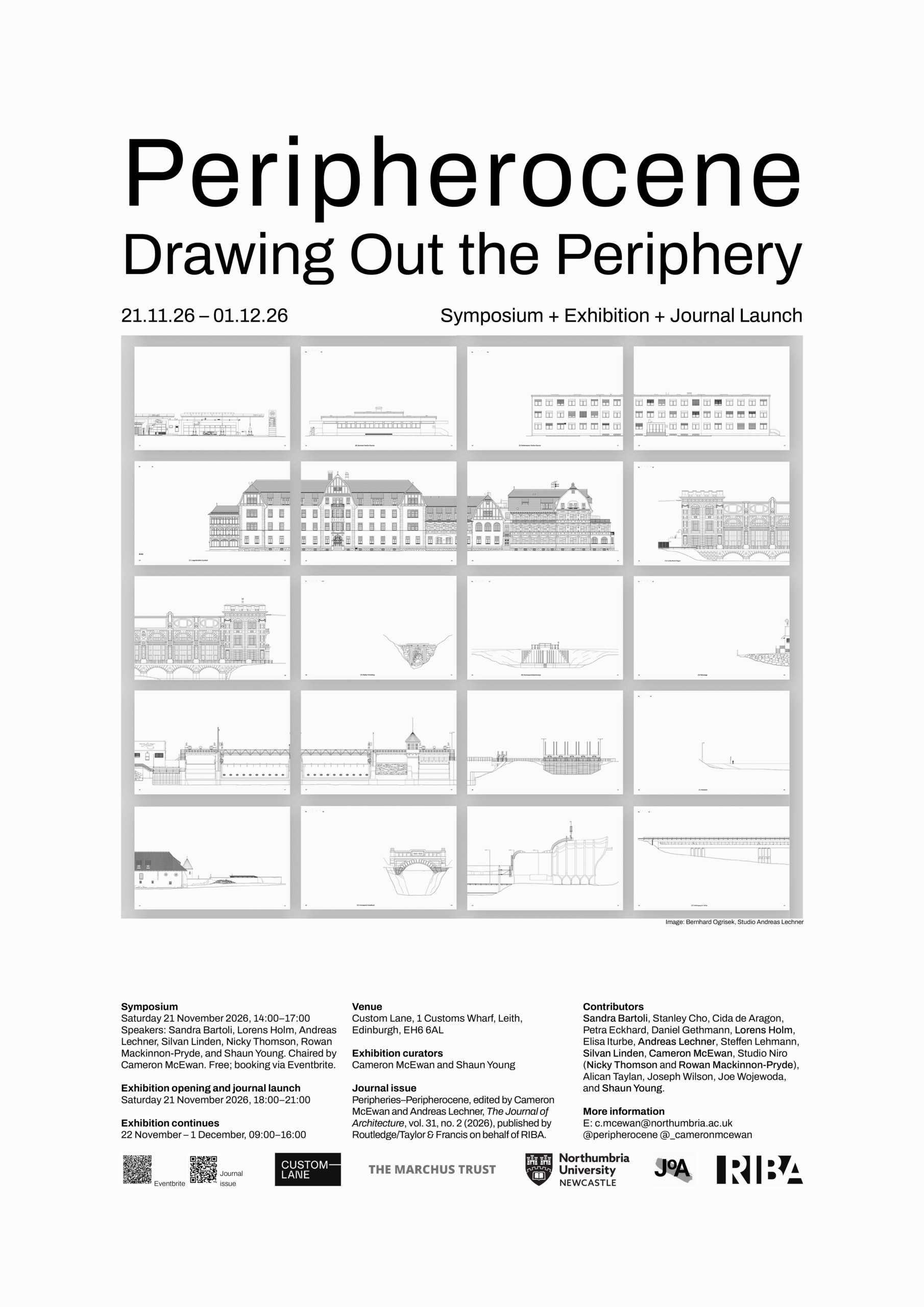
The term ‘Peripherocene’ is a play on ‘periphery’ and ‘Anthropocene.’ It is a montage and it is a latent idea in the projects curated here, which develop analytic, propositional, and representational tools, languages, and readings of urban peripheries under the pressure of the Anthropocene. The term captures something of the spatial and temporal order of the climate crisis, towards which architecture can lay a claim that is not only technical, but spatial and theoretical. The climate crisis is a spatial crisis because we know that our dominant modes of production, construction, and urban growth are harming the planet – from the consumption of green land and the narrowing public realm into enclaves of privatisation, to the operational landscapes and overdeveloped world of suburbs that extend our cities into peripheries.
It is also a crisis of imagination because we do not yet have the modes of thinking otherwise that may lead the way to alternative urban forms, which are always also social forms, and hence alternative visions of what we once called the good life. Drawing out the periphery is one place to articulate a critical project that might help us rethink ideas, forms, and attitudes to urban growth and design. Peripherocene may be a propositional framework for the periphery as a defining spatial condition of the Anthropocene. It is bad poetry, but perhaps we need some bad poetry for these bad times.
Curators Cameron McEwan and Shaun Young
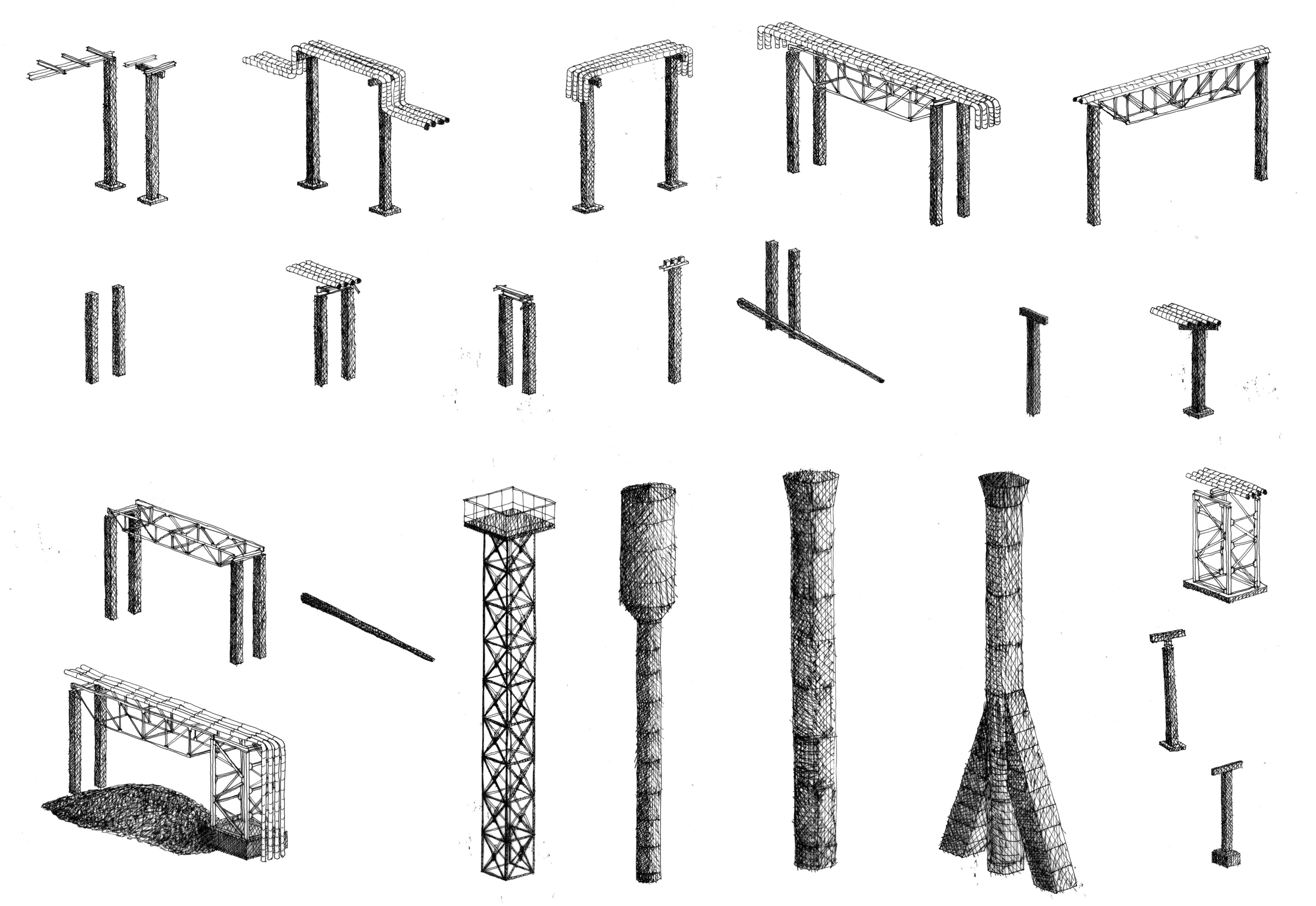
Much of the world’s urban growth happens less in urban centres and ever more at urban peripheries: in suburbs, operational landscapes, wastelands, and the spaces between city and region. This symposium and exhibition explore the periphery as the defining spatial condition of the Anthropocene, and the place where we can make a difference. The urban periphery is central to urban development processes and the spatial and ecological crises of the present times, yet it is where the pressures of climate, ecology, infrastructure space, and everyday life seem least examined.
We need new ways of seeing, representing, and thinking. We need new aesthetic and conceptual languages for the periphery in the time of the Anthropocene. This symposium, exhibition, and journal issue investigate peripheries from Berlin’s Tiergarten as an “inner periphery,” the operational landscape of peripheral Graz, a transect in Berlin’s Panke river, Newcastle’s robust regional landscape, Cumbernauld and its environs, the smooth space of transit between Penn Station and JFK airport in New York, the Las Vegas desert, the land around Stromness in Orkney, and Kyiv’s outskirts.
Symposium Event | 21.11.2026
This event marks the launch of The Journal of Architecture special issue “Peripheries–Peripherocene,” co-edited by Cameron McEwan (Northumbria University) and Andreas Lechner (TU Graz). It brings together architects, writers, and researchers whose work reads the periphery as a site of critical and creative possibility. An afternoon symposium (14:00-17:00) is followed by an exhibition opening and journal launch (18:00-21:00).
Speakers include;
Sandra Bartoli and Silvan Linden, Büro für Konstruktivismus, Berlin
Lorens Holm, Geddes Institute
Andreas Lechner, TU Graz
Nicky Thomson and Rowan Mackinnon-Pryde, Studio Niro
Shaun Young, Studio Reiver
Chaired by Cameron McEwan, Northumbria University
Journal issue:
Peripheries–Peripherocene, edited by Cameron McEwan and Andreas Lechner, The Journal of Architecture, vol. 31, no. 2 (2026), published by Routledge/Taylor & Francis on behalf of RIBA.